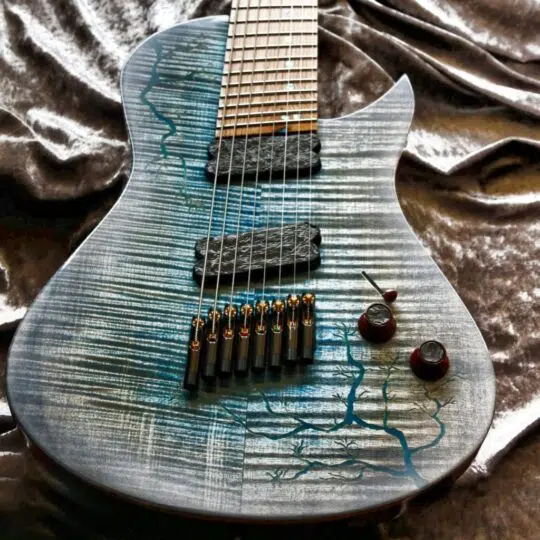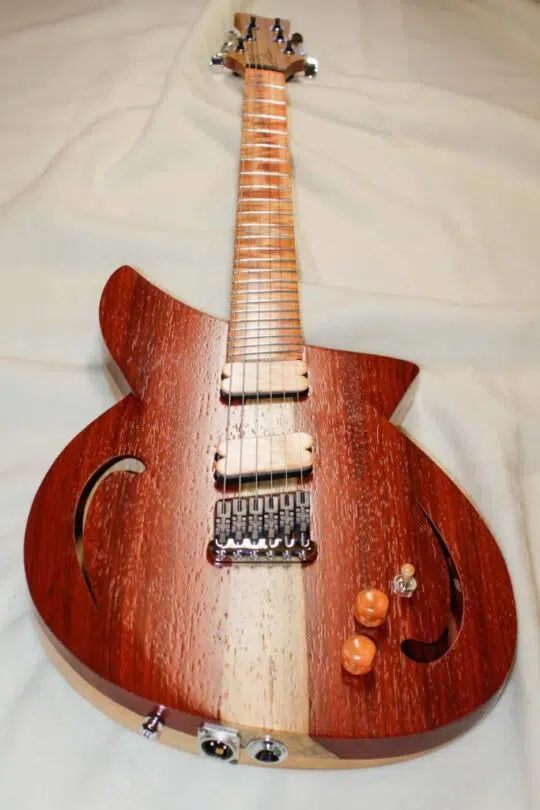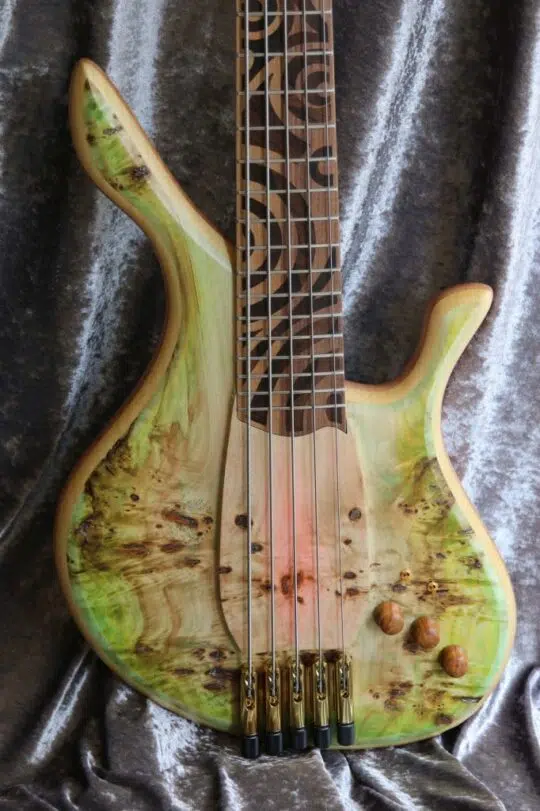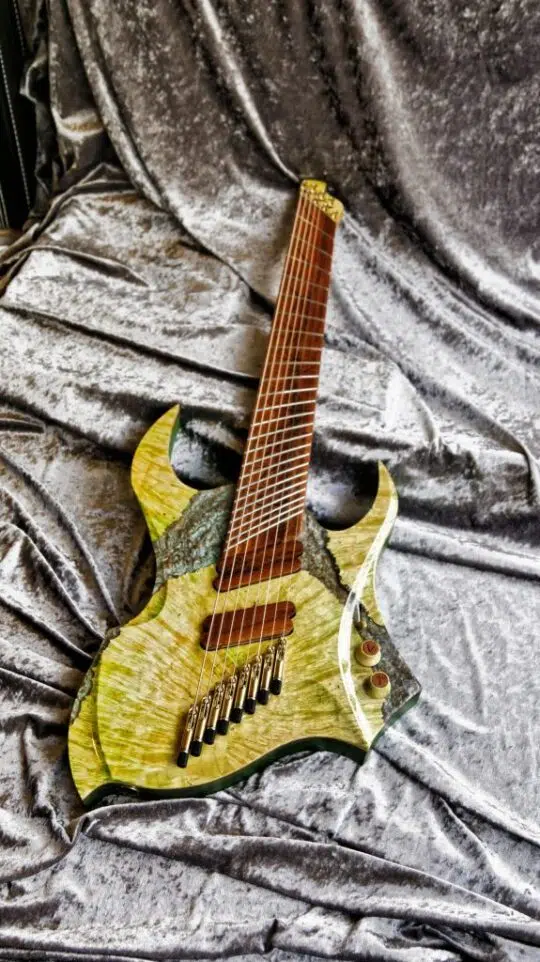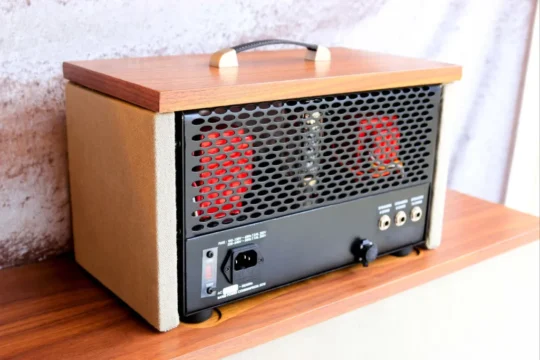


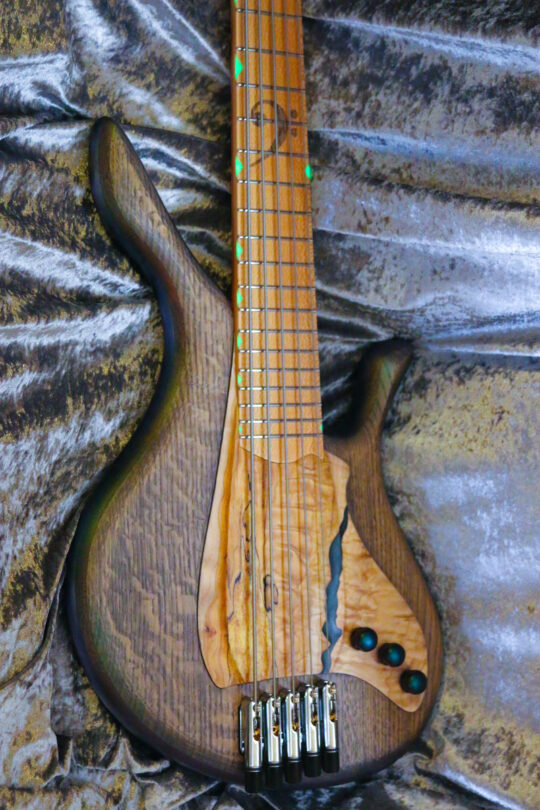
5-String Bass Sensus
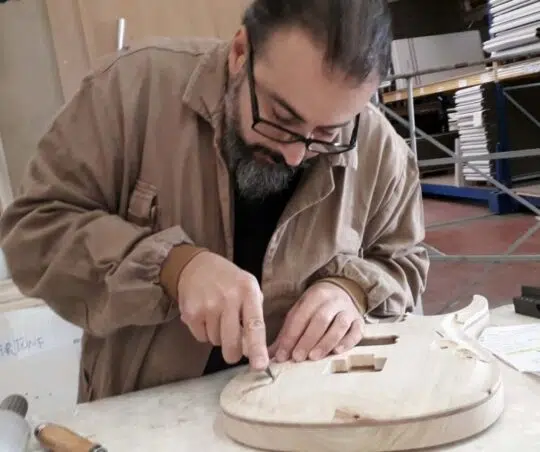 Founded as a family-run business by guitarist and master cabinetmaker Giacomo Berti, GB Liuteria operates as a laboratory of the highest mechanical and electronic specialization. The company’s philosophy develops around a strict conceptual pillar: combining the noblest tradition of solid tonewood lutherie with radical technological innovations aimed at eliminating superfluous mechanical components (such as visible screws and springs).
Berti demystifies the standard electric guitar, treating it as an integrated electro-acoustic system where the neck constitutes the fulcrum of the musician’s biomechanical interaction (“the neck is the instrument”), while the body and electronics cavity cooperate to expand the spectrum of the instrument’s native harmonics. Through the development of patents and cutting-edge proprietary solutions (such as the Multipick-up, Retro-spring and Ultraprofilo systems), GB Liuteria projects its creations into a category of their own in the global high-end musical instrument market.
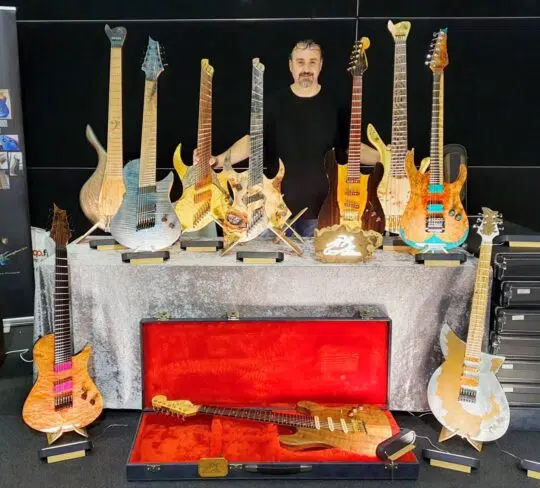
The workshop’s production is divided into two structural macro-categories, strictly excluding the installation or mounting of pickups from the front of the instrument in boutique models:
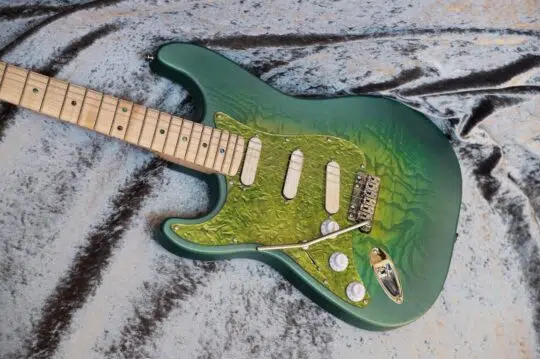 Giacomo Berti’s scientific advantage lies in the technological transfer of military-radio protocols and tube high-fidelity into the wooden instrument:
GB Liuteria’s internal circuitry rejects insulating resins or total encapsulation in heat-shrink tubing, solutions that are aesthetically appealing but detrimental as they prevent predictive maintenance in the event of failures. The components (high-precision logarithmic CTS or Alpha potentiometers selected based on the specific impedance of the pickups) are connected using Teflon-insulated military-grade copper and silver wiring.
The wiring is entirely designed according to a star ground shielding configuration. This methodology, borrowed from Class A high-fidelity tube amplifiers, channels all grounds to a single central nodal point. From an electrotechnical standpoint, star grounding prevents the formation of ground loops, preventing small potential differences from generating parasitic currents projected into the signal as background hum. Furthermore, it prevents oversized or incorrect shielding from physically acting as antennas, picking up external electromagnetic interference rather than eliminating it. The pickup interface connections adopt gold-plated Molex connectors to zero out contact resistances.
Introduced by Berti in 2014, this system represents a revolution in tonal management in the studio and on stage. Through calibrated through-holes on the back of the guitar, the musician can unhook the pickup by applying light pressure to the front. The pickup is extracted from the back in a few seconds, disconnecting from the Molex connector without the use of tools.
The system works optimally through the creation of 2 or 3 pre-assembled wooden blocks by the luthier. The locking and millimeter-precise height adjustment of the pickup are entrusted entirely to magnets, eliminating industrial springs that act as sources of spurious vibrations or microphonics induced by amplifier feedback.
The back of the neck (available in thick or thin profiles for 6, 7, and 8-string configurations) is carved by combining symmetrical or asymmetrical geometries with helical variation, up to “guided” shapes with ergonomic recesses designed to accommodate the fingers of the hand in extended ranges.
Structural stability is guaranteed by advanced lamination processes: the neck can be composed of a minimum of 2 pieces up to over 85 glued wood strips for a 6-string neck, with a minimum laminate thickness set at 0.6 mm. This dense network of strips with opposing grains (also applied to headstocks and fretboards in Ash, Zebrawood, or Ziricote) neutralizes the wood’s tensions. The fretboard (available with standard 24.75″ or 25.5″ scales, multiscale fanned-fret versions with progressive 0.15″ increments per string, and compound radiuses from 10″ to 28″) is governed by two double-action truss rods made entirely of titanium. Titanium (75.46 grams in weight per rod) guarantees a mechanical resistance superior to steel, reducing the mass of the neck and maximizing resonance and the yield of the fundamental tone.
 The high value of Giacomo Berti’s lutherie is historically validated by the adoption of his models (among which the Pliè model stands out) within top Italian television and record productions. Stable international-level collaborations include:
Consistent with the rigorous standards of the high-end musical instruments and equipment market, GB Liuteria adopts an operational model based on maximum transparency, interfacing with the musician who is searching for the best for their sound and playing experience.
Showing all 11 results