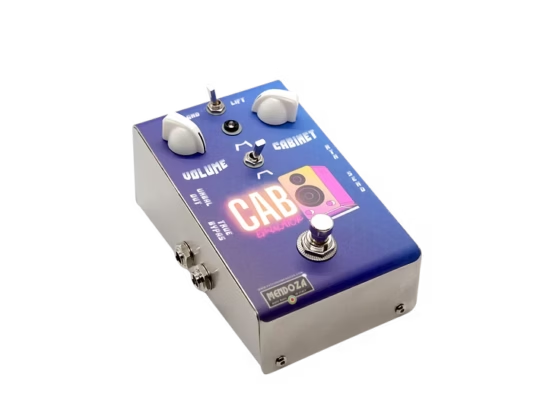


Bass Cabinet Emulator BASSTROCAB
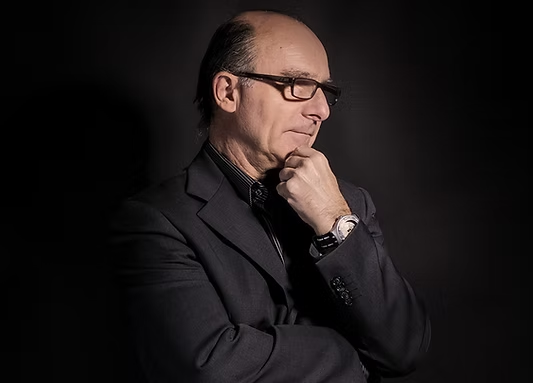 The roots of Fattoria Mendoza lie deep in the golden age of Italian music production. The founder, Maurizio Beltrami, began his journey in the early ’80s as an arranger and producer at the height of the Disco Music phenomenon. The decisive turning point took place at the historic Stone Castle Studios in Carimate, where his encounter with the legendary American sound engineer Allan Goldberg transformed his vision of the audio signal. Fascinated by the “towers” of processors and the artisanal handling of calculators, soldering irons, and capacitors carried out by Goldberg, Beltrami assimilated a fundamental principle: electronics should not merely distort or alter the sound, but rather enhance its harmonic structure.
After decades of amateur experimentation and fieldwork between Brescia and Milan, the accumulated experience crystallized in 2012 into the registered trademark Mendoza Hand Made in Cremona, the worldwide cradle of lutherie. The brand name itself, born almost as a joke from a fictional character created by Maurizio in his childhood (“Beltramin Mendoza”), today signs elite devices that professionals do not define as “effects”, but as true dynamics processors. Instruments designed to preserve the musician’s investment in their audio chain, enhancing touch sensitivity rather than flattening it.
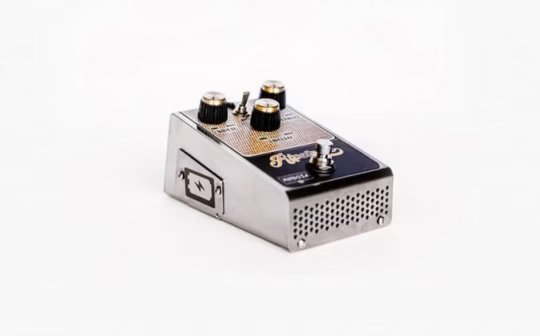
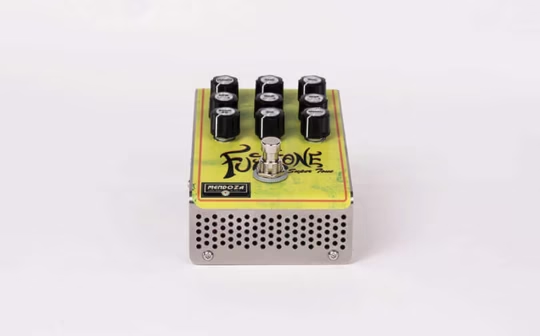
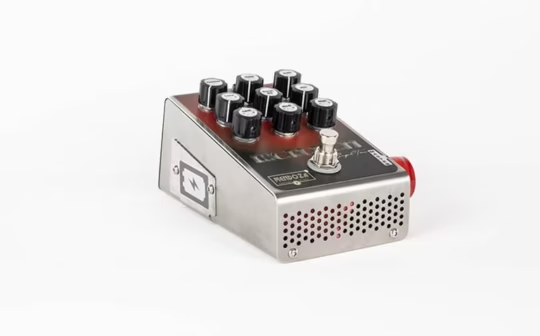
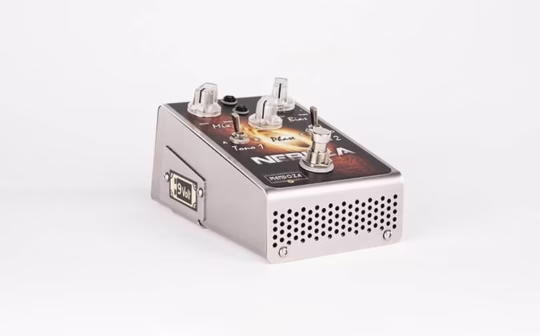
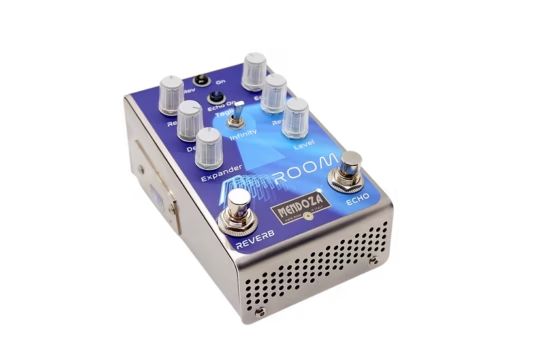
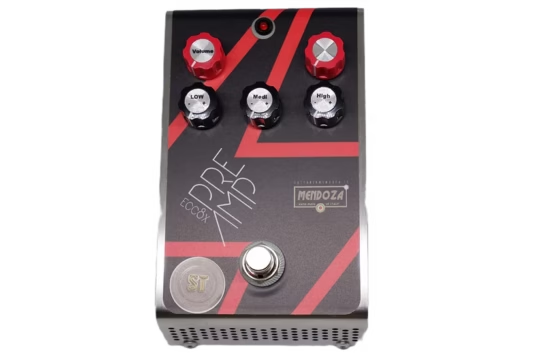
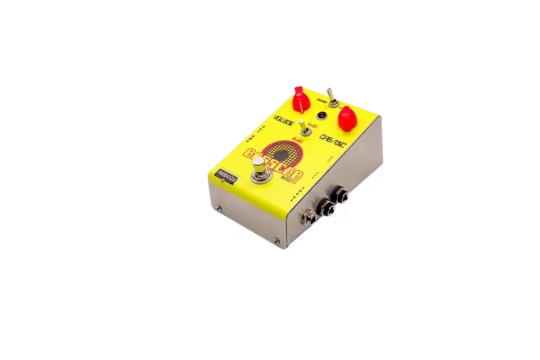
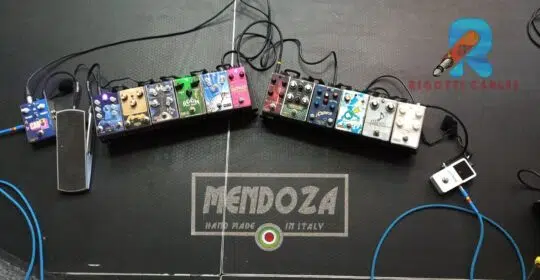 The Fattoria Mendoza catalog, grouped under the conceptual manifesto of “Harmonic Machines” (Macchine Armoniche), is built on entirely analog circuits designed for guitar, bass, and professional recording studio use:
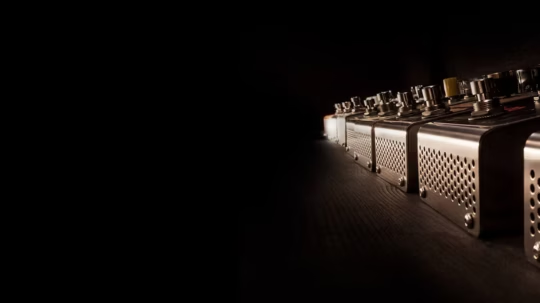 The construction philosophy of Fattoria Mendoza moves along the tracks of acoustic physics applied to semiconductors. Every circuit is designed to respect the dynamic integrity of the instrument upstream, avoiding the signal deterioration effect typical of digital compression or cheap integrated circuits.
The selection of materials reflects a rigorous search for tonal character:
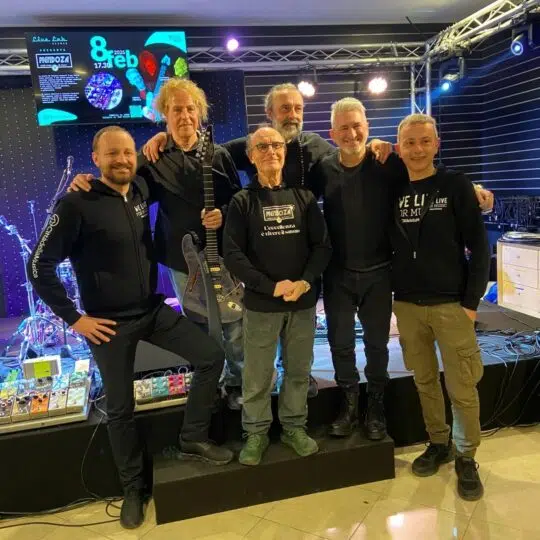 Fattoria Mendoza has gained authority over the years on both stages and in recording studios, thanks to a deep connection with the international fusion, jazz, and rock scene. Among the trusted early testers are bassist Roberto Pascucci and guitarist Mattia Tedesco.
The roster of musicians who have adopted these devices includes global legends of the caliber of Stanley Jordan, alongside guitar and bass virtuosos from the Italian scene such as Gianfranco Continenza, Massimo Varini, Umberto Fiorentino, Andrea Braido, Enrico Merlin, Danilo Gallo, and electric violinist Andrea Casta. Of particular note is the close synergy with the Bastron project, a trio composed of Giuseppe Fiori, Roberto Pascucci, and Toni Corizia, for whom the Bastro Cab processor was specifically developed.
Fattoria Mendoza adopts a highly consultative approach. The workshop does not limit itself to supplying the standard product, but offers genuine custom consulting for signal optimization.
The design of Cabinet emulators like the Bastro Cab stems precisely from the contemporary need to eliminate physical amplifiers on stage (silent-stage solutions) while maintaining harmonic dynamics and a response identical to those of a real speaker (from classic configurations like 1×12″, 2×12″ for guitar, up to 1×15″ or 8×10″ for bass), offering the musician total control of spatial sound.
We invite you to explore the technological and artisanal universe of Fattoria Mendoza, where the physics of analog electronics becomes the pure art of musical expression.
Showing all 8 results