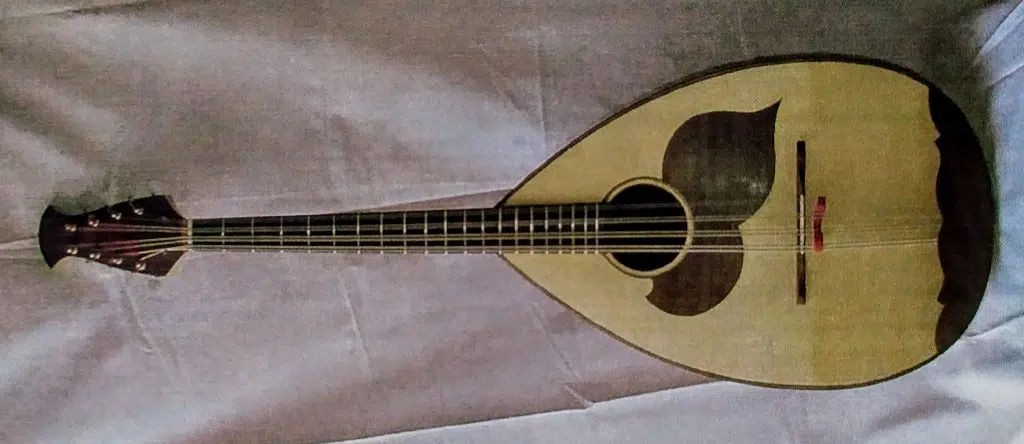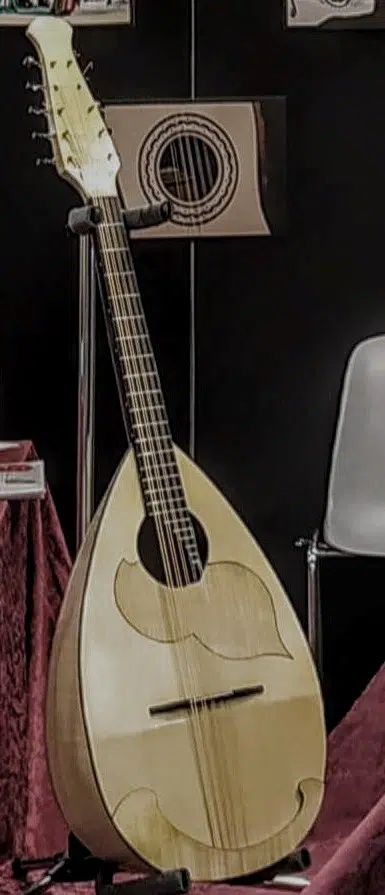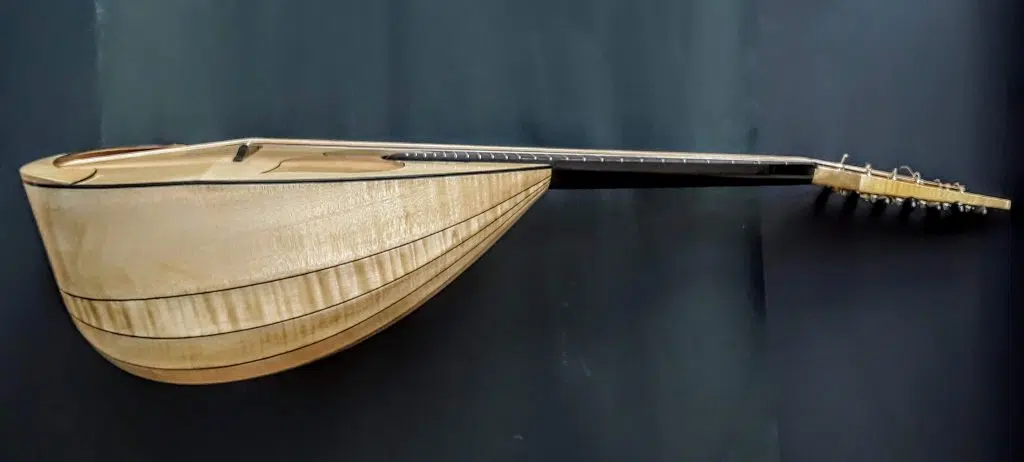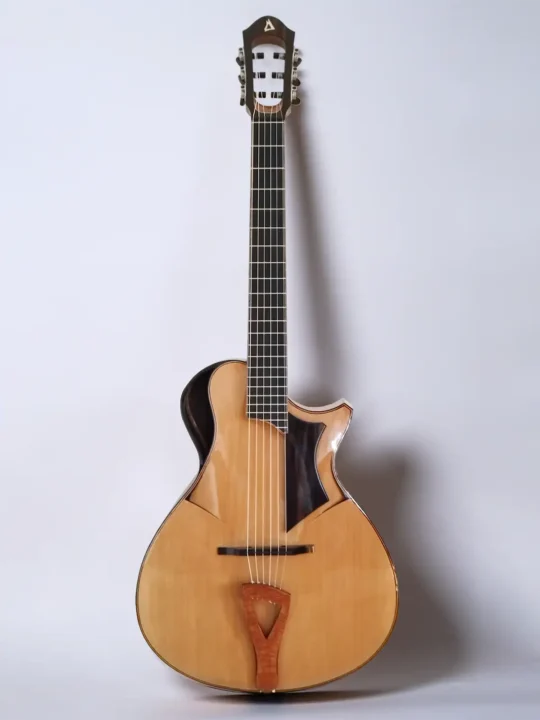

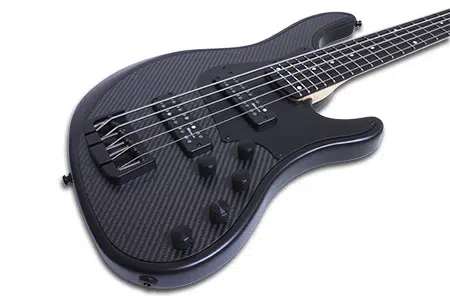
J-Special Deluxe 5 Bass
Custom Worldwide Shipping.
Pricing may vary based on requested customizations, order processing, and shipping destination. Please request a quote.
There is a certain magic in instruments that come to us from an “uncertain” past, those that appear in books with a few lines, some faded illustrations, and a long trail of questions.
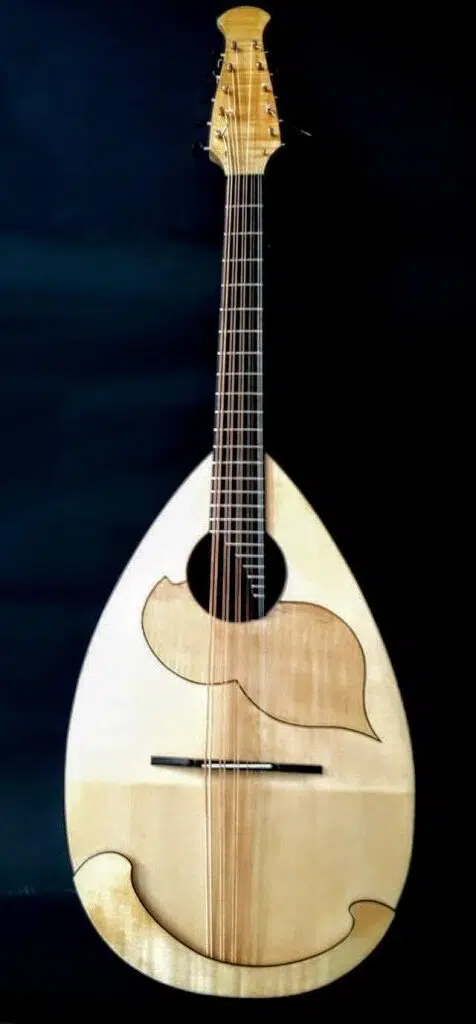
The mandocello – and its extended variant, the liuto cantabile – belongs precisely to this family: instruments born on the margins of official history, but central to folk musical life.
This model was created to resolve a historical flaw: no one, in the 19th century, had dared to build a mandocello with a scale length truly suitable for its natural tuning (that of the cello). Practical reasons, probably: larger instruments mean more difficult technique, and the mandolinists of the time, often amateurs, needed something more “human”.
Here, however, the instrument breathes in its complete form: optimal dimensions, sonic balance, and the ability to project in both the bass and high registers.
And when the fifth string (E) is added, it becomes a “liuto cantabile”, with a valuable range for the Neapolitan mandolin literature of the 20th century.
It is a large instrument, physically and musically. A stage companion that doesn’t just support — it sings, dialogues, and leads.